
- What Is a Solitaire Diamond?
- Evolution of Solitaire Engagement Rings and Social Impact
- Why Choose Gemlay Jewels for Solitaire Diamonds
- Conclusion
- FAQs
- Question: How Can I Choose A Solitaire Diamond?
- Question: Is A Solitaire Diamond A Real Diamond?
- Question: Which Is More Expensive: Solitaire Or Diamond?
- Question: What Makes A Solitaire Diamond?
- Question: Can A Solitaire Diamond Crack?
- Question: Are Lightweight Solitaire Diamond Rings Good For Everyday Wear?
- Question: How Do I Choose The Perfect Solitaire Diamond Online?
- FAQs
What comes to your mind when you hear the word solitaire? Something fancy. It’s the kind of diamond that makes you stop and stare. But do you really know what does it actually mean? And why do people pay so much attention to solitaire rings? Specifically, when hunting for engagement or anniversary gifts?
Let’s break it down.
What Is a Solitaire Diamond?
When you hear the word “solitaire,” a picture of refined luxury and timeless elegance likely comes to mind. Solitaire diamond jewellery possesses the unrealistic magic to arrest attention with its singular sparkle. It stands as the centrepiece in rings, necklaces, earrings, and more. But still, it is a mystery! What truly defines a solitaire diamond, and why is it the most coveted choice for engagement and anniversary milestones?
Relax! This guide explores its deep significance in fine jewellery. Solitaire diamond has a journey from earth to become an heirloom. Here, you will get to know about the evolution of its styles. Moreover, you will read expert advice on selecting your perfect piece.
Solitaire Diamond: Definition and Meaning
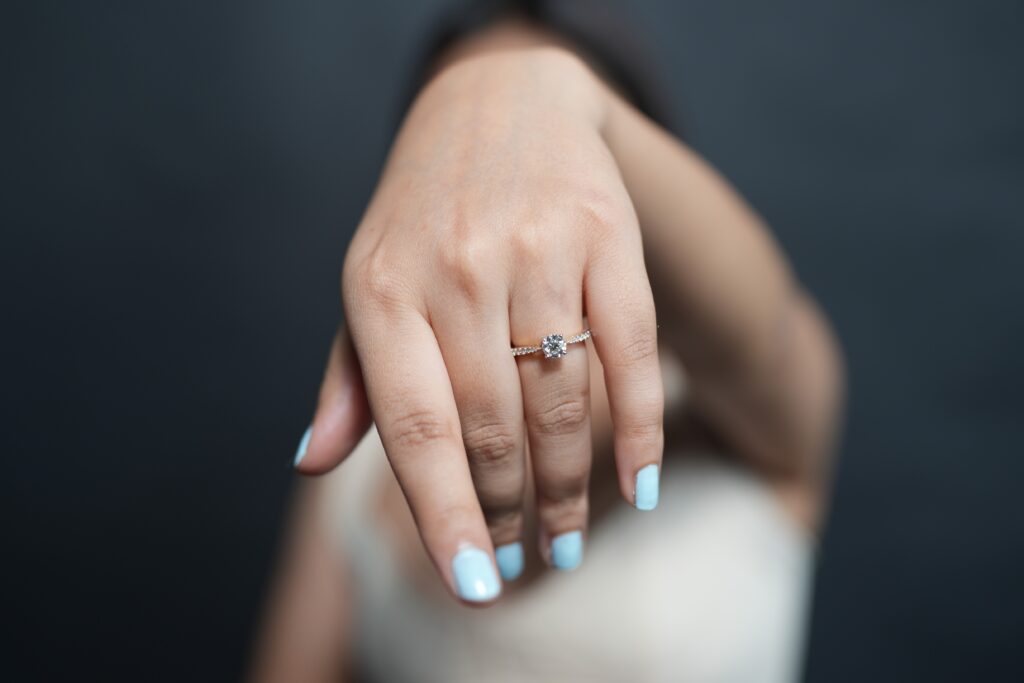
A solitaire diamond is simply a single, standalone diamond set into jewellery. It could be a ring, pendant, earring, or ornament. That jewellery should ideally be without clusters, halos, or side stones to distract from its brilliance. The purpose of having such a uncanny setting is to grab the focus entirely on the lone gem. This makes it the “hero” of the design.
The term “Solitaire” is derived from the Latin “solitarius”. The meaning is “alone” or “single”. Solitaire diamond must meet high standards of cut, clarity, and carat to truly shine. This rule applies to earth-mined, and lab-grown solitaires.
Historical Significance of Solitaire Designs
In the 15th century, Archduke Maximilian of Austria presented Mary of Burgundy with the very first diamond engagement ring. From this very event, solitaire diamonds entered the European Market. It became a sparkling trend among the nobility.
You might be astonished to know that the concept of the engagement ring itself traces back even further. It was ancient Egyptians and Romans who introduced the rings as symbols of love and betrothal.
The classic solitaire ring came into trend in the early 20th century. It perfectly aligned with the emergence of the “A Diamond is Forever” campaign by De Beers in 1947. That campaign treasured diamonds as the premier stone for engagement.
The prong setting of the Solitaire Engagement rings became icons after Tiffany & Co. introduced their “Tiffany setting” in 1886. This setting has six metal claws elegantly holding a round diamond upward. Over time, solitaires have become synonymous with eternal commitment and understated opulence. These are value echoed in Western wedding traditions, which is now celebrated globally.
Characteristics and Specifications of Solitaire Diamonds
Finding a perfect solitaire that suits your taste and expectation requires talking to your heart, plus having some basic knowledge. To make a smart choice, you’ve got to know the concepts of the 4Cs and beyond.
Solitaire Diamond Characteristics and Specifications
Cut
The cut decides how much sparkle you’ll get. If you know a bit of science then you will know that refraction is the process responsible to make a solitaire sparkle extraordinarily. This isn’t about the shape but how well the diamond interacts with light. Excellent and Very Good cuts deliver maximum scintillation.
Clarity
Clarity of a solitaire refers to number of blemishes and turbidity a solitaire diamond has! The fewer they are (e.g. VVS1), the clearer and fiery the stone looks. The logic in simple, a clearer stone allows light to interact properly with cuts the diamond has.
Colour
Most diamonds have a hint of colour (usually yellow). Diamonds graded from D are the most colourless. Moving from D to Z, visibility degrades. That is why, for solitaires most people prefer D to H grades.
Carat Weight
This is where things get interesting. Most people don’t know that Carat measures weight, not size of a solitaire diamond. A 1-carat diamond could look very different depending on the cut. Colour and clarity.
Polish & Symmetry
People are usually not aware that Polish & Symmetry of a solitaire matter a lot. A diamond with excellent polish and symmetry will look sharper and more proportionate. Due to symmetry, the process enhances shine.
Fluorescence
Some diamonds glow under UV light. It’s not a defect but just a natural trait. But strong fluorescence might make a diamond look hazy in some lighting.
Solitaire Diamond Shape and Types
Each shape adds its essence to a jewellery piece. It is a personal choice to select a particular shape of solitaire diamond depending on their taste.
Popular Solitaire Diamond Shapes
- Round: The classic king. Maximum brilliance.
- Princess: Edgy square with a modern vibe.
- Emerald: Rectangular with mirror-like reflections. Very elegant.
- Oval: Stretch the beauty—looks slightly bigger.
- Cushion: Soft corners, vintage charm.
- Pear: Half round, half pointed. Tear-drop elegance.
- Marquise: Dramatic and elongated. It makes your fingers look longer.
Popular Settings
- Prong Setting: the most popular and ancient it is! These are like metal claws grip the diamond. It keeps the diamond aloft that maximises the brilliance. This minimalist style highlights the diamond while ensuring its safety.
- Bezel Setting: In this the metal encircles the diamond. It has a sleek and protective look. This particular setting is favoured by those with active lifestyles.
- Cathedral Setting: Here, the elegant arches lift the stone higher. This setting protects the stone from the sides.
- Tension Setting: It gives an illusion of the diamond floats. This is an ultra-modern and bold setting, preferred by Genz and Millennials.
Natural vs Lab-grown Solitaires
Natural diamonds are naturally mined from earth. Lab-grown diamonds are created using advanced tech like CVD in a laboratory. Both are considered real diamonds. The major difference is lab-grown solitaires cost 30–40% less and are increasingly popular. But as these can be produced in bulk, the significance is low and its resale value is nothing.
Solitaire Diamond Weight
Now you know that carat is often misunderstood. It tells you how much a diamond weighs, not necessarily how big it looks.
For example:
- A 1-carat round diamond is roughly 6.5 mm in diameter.
- A 1-carat oval can look bigger due to its elongated shape.
- Cushion shape solitaire often look smaller, even with the same weight.
So always check the dimensions (mm) along with the carat value.
Solitaire Diamond Size and Carat Explained
Here’s a quick look at typical sizes of round diamonds for reference:
- 0.25 carat → ~4.1 mm
- 0.50 carat → ~5.2 mm
- 0.75 carat → ~5.8 mm
- 1.00 carat → ~6.5 mm
- 1.50 carat → ~7.4 mm
- 2.00 carat → ~8.2 mm
Carat affects cost exponentially, not linearly. A 2-carat diamond isn’t double the cost of a 1-carat. It may be 3x or 4x. this is because other factors, cut and clarity, plays a major role in deciding its cost.
Evolution of Solitaire Engagement Rings and Social Impact
Gone are days when Solitaire Rings were regarded as only aristocratic luxury. Thanks to the evolution of the middle class globally, it is now opted by the common man as well. Solitaire engagement ring symbolizes enduring love. Plus, it also showcases an individualistic style. It is certainly personification of
Global marketing campaigns such as De Beers’ have elevated the solitaire as the universal choice for engagement proposals. With an upsurge of lab-grown diamonds, access to solitaire jewellery ornaments have increased world-wide.
Expert Tips for Buying Your Solitaire
- Know Your Budget: The combination of carat, clarity, and cut directly affects price. Hence, you have to decide prior what is important for you. Is it brilliance, blemish-free or the size of the diamond?
- Certification: Ensure you get GIA, IGI, or SGL certification for authenticity of the diamond. It applies to both kinds of purchasing – online and offline.
- Shape and Setting: This has a high dependence on one’s lifestyle and taste.
- Online Shopping: Check for reputable brands like Gemlay. They are the trusted ones, which is axiomatic by their reviews and ratings on various platforms.
- Maintenance: it is recommended to choose settings that allow for easy cleaning, such as tension or prong. There are a few home cleaning tips which are, indeed, helpful for regular maintenance.
Why Choose Gemlay Jewels for Solitaire Diamonds
Let’s be honest. There are a lot of places selling solitaire diamonds online. But when you’re spending on a natural diamond that stays with you for a lifetime, you need quality, transparency and trust. This is where Gemlay Jewels comes into picture.
At Gemlay:
- You get a wide selection of both natural solitaire diamonds.
- Every diamond is IGI certified and set in BIS hallmarked gold.
- You can choose a design from Gemlay’s Solitaire Collection of rings, earrings and pendants. For a personalised touch, we offer engraving facility. Moreover, you can choose the metal colour of any selected jewellery as per your taste.
- Our customer support is always ready to choose the right solitaire piece.
Are you as well planning to buy jewellery online? You are at a safe place! Gemlay combines expert craftsmanship with a seamless shopping experience. Gemlay offers a wide range of light weight solitaire collections.
Conclusion
Solitaire Diamonds are a symbol of commitment. They are a reflection of personal style. Understanding concepts of 4Cs gives you a self-assurance. So, whether you’re picking a solitaire engagement ring or a necklace for daily wear, the knowledge will be helpful.
We’re offering trust, customization, and clarity. That’s why Gemlay Jewels is a top-pick online jewellery brand. It’s where high-quality solitaire jewellery meets everyday elegance. From lightweight rings under budget to luxury options without limits, Gemlay has it all.
FAQs
Question: How Can I Choose A Solitaire Diamond?
Answer: It is important to know your budget. Based upon that you should look for a shape of diamond you like. And always seek for the-certified products only.
Question: Is A Solitaire Diamond A Real Diamond?
Answer: Yes. It is a single diamond. It can be mined or lab-grown.
Question: Which Is More Expensive: Solitaire Or Diamond?
Answer: Solitaire is a diamond which is higher in weight. Mostly, above 30 cents. Diamond prices grow exponentially depending upon their Cut, Clarity, Carat and Colour. Hence, when a diamond is regarded as solitaire, it will be expensive.
Question: What Makes A Solitaire Diamond?
Answer: Solitaire diamonds are famous for being the hero stone. A diamond is called a solitaire when it has optimum carat, clarity and cut.
Question: Can A Solitaire Diamond Crack?
Answer: Diamonds are strong, but not unbreakable. Choose protected settings like bezel if you want extra security.
Question: Are Lightweight Solitaire Diamond Rings Good For Everyday Wear?
Answer: Absolutely. They are elegant and suitable with any kind of attire.
Question: How Do I Choose The Perfect Solitaire Diamond Online?
Answer: Brands like Gemlay offer filters for cut, carat, clarity, color, and settings. Check certifications, photos, and customer reviews before you buy.