
Introduction
When shopping for gold jewellery, you’ll often see markings like 22K, 916, 18K, or 750 — but what do they mean, and which one is better? The 18k and 22k gold difference fundamentally comes down to purity and strength, which affect appearance, durability, price, and suitability for different types of jewellery. This guide explains these facts clearly and cites authoritative sources — no inventions, only verified info.
What Does “Karat” Mean in Gold Jewellery?
Gold purity is measured in karats (K), indicating how much of the piece is pure gold out of 24 parts:
- 24K gold = 99.9% pure gold (pure gold).
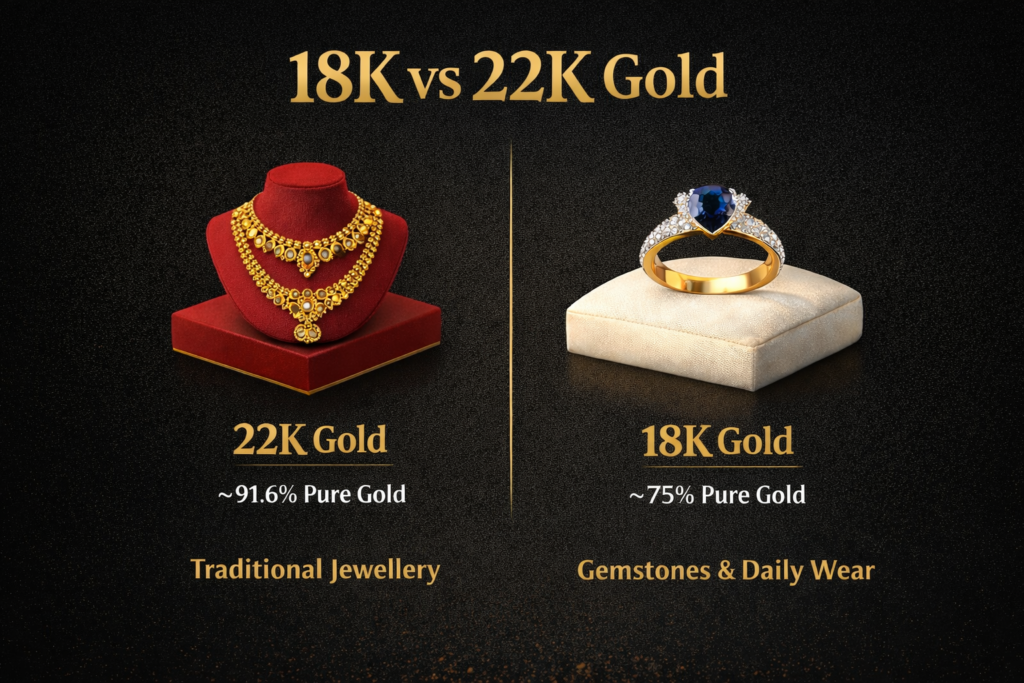
- 22K gold ≈ 91.6% pure gold (22 parts out of 24).
- 18K gold = 75% pure gold (18 parts out of 24).
This also links to numerical purity marks seen on jewellery:
- 916 gold purity = 91.6% (22K)
- 750 gold purity = 75% (18K)
These numbers appear on hallmarks to certify purity.
22K Gold: Purity and Properties
Purity of 22K Gold
22K gold contains about 91.6% pure gold with the rest made up of other metals like copper or silver to increase strength and workability.
Colour and Traditional Appeal
- Higher gold content gives 22K gold a richer, deeper yellow colour.
- It’s a traditional choice in many regions, especially in Indian wedding jewellery.
Strength
- Though stronger than 24K gold, 22K gold is still relatively soft compared to lower-karat grades.
Common Uses
- Popular for traditional jewellery and ornaments.
18K Gold: Purity and Properties
Purity of 18K Gold
18K gold contains 75% pure gold alloyed with other metals such as silver, copper, or zinc.
Colour and Strength
- The added alloys give 18K gold a slightly lighter yellow tone than 22K.
- It is harder and more durable than 22K, making it more suitable for everyday wear and detailed designs.
Common Uses
- Ideal for jewellery with gemstones, rings, bracelets, and pieces that face frequent handling.
If you are choosing jewellery for everyday use, this guide will help: 👉 How to Choose the Right Gold Purity for Daily Wear Jewellery
Gold Purity and Gemstone Jewellery: 18K vs 22K
One of the most important but often overlooked aspects of the 18k and 22k gold difference is gemstone suitability.
Why 18K Gold Is Best for Gemstones
18K gold is preferred for gemstone and diamond jewellery because:
- It is stronger and more durable, allowing secure stone settings
- It holds prongs and intricate designs firmly over time
- It reduces the risk of gemstones loosening with regular wear
Common gemstones set in 18K gold include:
- Diamonds
- Ruby
- Emerald
- Sapphire
- Moissanite
- Topaz, Amethyst, Aquamarine
This makes 18K gold ideal for engagement rings, daily wear rings, bracelets, and gemstone pendants.
Gemstones Used with 22K Gold
Because 22K gold is softer, gemstone use is usually limited to traditional and heavier designs.
Gemstones commonly seen in 22K gold jewellery include:
- Polki (uncut diamonds)
- Kundan stones
- Navratna gemstones
- Large cabochon-cut stones
These are typically used in bridal, temple, and heritage jewellery, where designs are heavier and worn occasionally.
18K vs 22K Gold: Key Differences
This highlights the 18k and 22k gold difference in practical use.
| Feature | 22K Gold (916 gold purity) | 18K Gold (750 gold purity) |
| Purity | ~91.6% pure gold | ~75% pure gold |
| Colour | Rich, deep yellow | Slightly lighter yellow |
| Durability | Softer, more prone to scratches | Harder, more durable |
| Everyday Wear | Less ideal for rough daily use | Better suited for everyday wear |
| Traditional Jewellery | Favoured for classic pieces | Used widely but less traditional |
BIS Hallmark: Guaranteeing Purity
In India, gold jewellery is often certified with a BIS hallmark indicating its purity:
- BIS hallmark includes the gold purity mark such as 22K 916 or 18K 750.
- This mark confirms the gold’s purity as tested by the Bureau of Indian Standards.
Hallmarks help buyers trust that the gold’s claimed purity is accurate. To understand purity symbols, hallmark formats, and the HUID system in detail, read our complete guide on What is BIS Hallmark? Types, How to Read Hallmarks, HUID System, and Checking for Hallmarks at Home.
Why Purity Matters for Price and Resale
The live gold price per gram influences the overall cost of jewellery, but the specific purity (like 916 vs 750) plays a big role in pricing. Higher purity (like 22K) normally fetches a higher base value per gram compared to lower purity (like 18K), though resale price also depends on market demand.
Pros and Cons: 22K vs 18K Gold
22K Gold – Pros
- Higher intrinsic value due to more gold content.
- Rich yellow colour is often preferred for traditional weddings.
22K Gold – Cons
- Softer metal means it can wear or bend with heavy everyday use.
18K Gold – Pros
- More durable and resistant to scratches.
- Better for studded and intricate jewellery designs.
18K Gold – Cons
- Lower gold purity means slightly less intrinsic value per gram.
Which Should You Choose?
There’s no universally “better” option — it depends on your needs:
- Choose 22K if you value higher purity and rich colour, especially for traditional pieces.
- Choose 18K if you want durability, everyday wear performance, and modern designs.
This is the essence of the 18k and 22k gold difference.
Conclusion
Understanding the difference between 18K and 22K gold helps you choose jewellery that fits your lifestyle, occasion, and budget. While 22K gold purity percentage is higher, offering a deeper yellow and more intrinsic gold content, 18K gold purity percentage provides a balanced combination of purity and strength. Certified by BIS hallmark marks like 916 and 750, both options remain popular in jewellery — it ultimately comes down to whether you prioritize tradition or daily wear.