
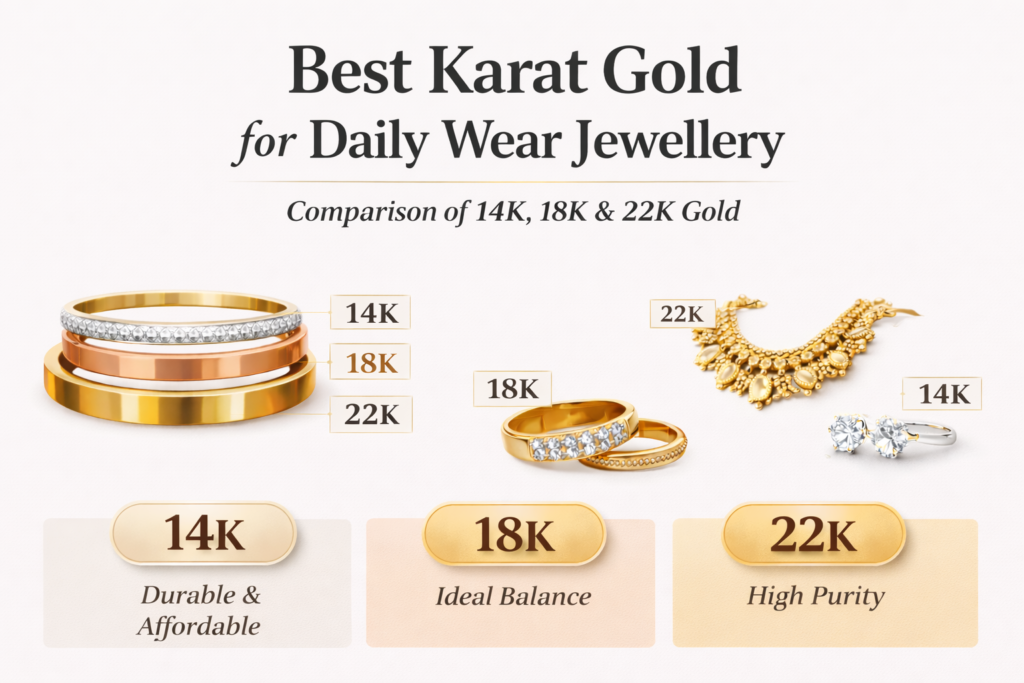
Gold jewellery is an inevitable part of Indian culture. More than just an ornament, it symbolises prosperity, harmony, and long-term security. From weddings and festivals to everyday adornment, gold holds deep emotional value in Indian households.
However, when buying jewellery for daily wear, beauty alone is not enough. Factors such as gold purity, durability, skin comfort, lifestyle, and budget play a crucial role. This guide explains different gold purities and helps you choose the right gold karat for everyday jewellery with confidence.
Understanding Gold Purity
Gold purity is measured in Karats (K), which indicates how much pure gold is present in a jewellery piece. Since pure gold is naturally soft and brittle, it is mixed with metals such as copper, silver, nickel, or zinc to improve strength and durability. The karat value reflects the proportion of pure gold in the alloy.
Common Gold Karats Available in India
- 24 Karat – 99.9% pure gold
- 22 Karat – 91.6% pure gold
- 18 Karat – 75% pure gold
- 14 Karat – 58.3% pure gold
A higher karat means higher purity—but higher purity does not always make gold suitable for daily wear jewellery.
Which Gold Karat is Suitable for Daily Wear?
1. 24 Karat Gold (99.9% Pure)
24K gold is the purest form of gold and has a rich yellow colour. However, it is extremely soft and brittle, making it unsuitable for jewellery that is worn regularly. It is mainly used for coins, bars, and investment purposes.
2. 22 Karat Gold (91.6% Pure)
22K gold is widely used for traditional Indian jewellery due to its high purity and luxurious appearance. While it is more durable than 24K gold, it is still relatively soft. Intricately designed 22K jewellery may bend or scratch with frequent use, making it better suited for occasional or festive wear rather than everyday jewellery.
3. 18 Karat Gold (75% Pure)
18K gold is considered the best karat gold for daily wear jewellery for most people.
It offers an ideal balance between purity, durability, and aesthetics. The added alloys make it stronger and more resistant to scratches and bending, while still maintaining a premium appearance.
18K gold is commonly used for rings, bangles, bracelets, and neck chains that are worn daily. It is also ideal for modern jewellery styles such as rose gold and white gold.
4. 14 Karat Gold (58.3% Pure)
14K gold is a popular choice for those looking for durable and budget-friendly daily wear jewellery. With a higher alloy content, it is stronger and more resistant to daily wear and tear while retaining a subtle warm gold tone. It works well for jewellery pieces that face constant use, such as bracelets, earrings, and rings.
Key Factors to Consider While Buying Gold Jewellery
1. BIS Hallmark
Always check for the BIS (Bureau of Indian Standards) hallmark, which certifies the purity and authenticity of gold jewellery in India. A BIS hallmark typically includes the BIS logo, purity in karat and finesse, the assaying centre’s mark, and the jeweller’s identification mark.
Want to understand gold hallmarks in detail?
Read our complete guide on What is BIS Hallmark? Types, How to Read Hallmarks, HUID System, and How to Check Hallmarks at Home to make informed gold-buying decisions.
2. Purity Certificate
Always ask for an invoice or purity certificate mentioning gold purity, weight, and making charges. This document is essential for transparency and makes future exchange or resale easier.
3. Usage and Durability
The higher the purity, the softer the gold. Jewellery such as rings and bangles that are worn daily require better durability. 18K and 14K gold are the most practical choices for everyday comfort and longevity.
4. Colour Preferences
Gold jewellery today is available in multiple hues depending on alloy composition:
- Yellow Gold – Traditional and warm-toned
- White Gold – Alloyed with palladium or nickel and rhodium-plated
- Rose Gold – Copper-rich alloy with a soft pink hue
5. Skin Sensitivity
People with sensitive skin often tolerate higher-purity gold better. While 22K gold is gentler on skin, many people comfortably wear 18K gold. Lower karats may cause irritation due to higher alloy content.
The Bottom Line: Which Gold Purity Is Best for Daily Wear Jewellery?
- 18K gold is the best choice for daily wear jewellery due to its balance of purity, durability, and modern design versatility.
- 14K gold is an excellent alternative for those seeking extra durability at a more affordable price.
- Avoid 24K and 22K gold for daily wear, as they are too soft for regular use.
Always consider your lifestyle, skin sensitivity, and budget before buying gold jewellery. Checking the live gold price and ensuring proper BIS hallmark certification will help you make a confident and long-lasting choice.
Frequently Asked Questions (FAQs)
Question 1: What is the best gold purity for daily wear jewellery?
For daily wear jewellery, 18K gold is considered the best option as it offers the ideal balance of purity, durability, and appearance. It is strong enough to withstand everyday wear while still maintaining a rich gold finish.
Question 2: Is 22K gold suitable for everyday wear?
22K gold is generally not recommended for daily wear because it is relatively soft. While it is perfect for traditional and occasional jewellery, daily use may cause scratches, bends, or loss of shape over time.
Question 3: Why is 18K gold better than 22K gold for daily use?
18K gold contains a higher proportion of alloy metals, which makes it more durable and resistant to wear and tear than 22K gold. This makes 18K gold more suitable for rings, bangles, and bracelets worn daily.
Question 4: Can I wear 14K gold jewellery every day?
Yes, 14K gold jewellery is ideal for daily wear, especially for people with active lifestyles. It is highly durable, budget-friendly, and resistant to scratches, making it a practical choice for everyday use.
Question 5: Is higher karat gold always better?
No. Higher karat gold means higher purity, but it also means softer metal. For daily wear jewellery, durability is more important than maximum purity, which is why 18K or 14K gold is often a better choice.
Question 6: How can I check the purity of gold jewellery in India?
You can check gold purity by looking for the BIS hallmark, which confirms authenticity and karat value. Reputed jewellers also offer on-the-spot testing using a karatmeter.
Question 7: What gold purity is best for sensitive skin?
People with sensitive skin generally tolerate 22K gold better due to its higher purity. However, many people also comfortably wear 18K gold without irritation.
Question 8: Does daily wear gold jewellery lose value?
Daily wear jewellery may show surface wear over time, but gold itself does not lose intrinsic value. The resale value depends on gold purity, weight, and current gold prices.
Question 9: Is white gold or rose gold suitable for daily wear?
Yes, white gold and rose gold, usually crafted in 18K or 14K purity, are suitable for daily wear. Their durability comes from the alloy composition used during crafting.
Question 10: Should I always buy BIS-hallmarked gold jewellery?
Yes, buying BIS-hallmarked gold jewellery ensures purity, authenticity, and transparency. It also makes resale, exchange, and insurance claims easier.